
Find Criminal Court Records in Michigan
Michigan criminal court records are held by Circuit, District, and Probate Courts in each of the state's 83 counties. You can search case filings, view docket entries, or look up criminal history through several state and local systems. The Michigan State Police operate ICHAT, a paid online tool for name-based criminal history searches. MiCOURT provides free access to basic case information from courts across Michigan. This guide explains how to find Michigan criminal court records, which offices to contact, and what each search method returns.
Michigan Criminal Court Records Overview
How to Access Michigan Criminal Court Records
Michigan criminal court records come from two main types of trial courts. Circuit Courts sit in each of the state's 83 counties and handle felony criminal cases. District Courts handle misdemeanor offenses, traffic matters, and lower-level civil cases. Both courts keep public records. The county clerk often serves as the Circuit Court clerk and manages those case files. District Court clerks run separate records offices in most counties.
Three main ways exist to search Michigan criminal court records. The first is the free MiCOURT case search system at micourt.courts.michigan.gov, which covers courts throughout the state. The second is the ICHAT system, a paid name-based criminal history tool run by the Michigan State Police. The third is an in-person visit to the county courthouse. Each method returns different information. MiCOURT shows case status and docket entries. ICHAT shows a person's full criminal history across Michigan. In person, you get access to the complete case file, including all documents and filings.
The Michigan Courts website at courts.michigan.gov provides a directory of all state courts, with addresses, phone numbers, and links to local court websites.
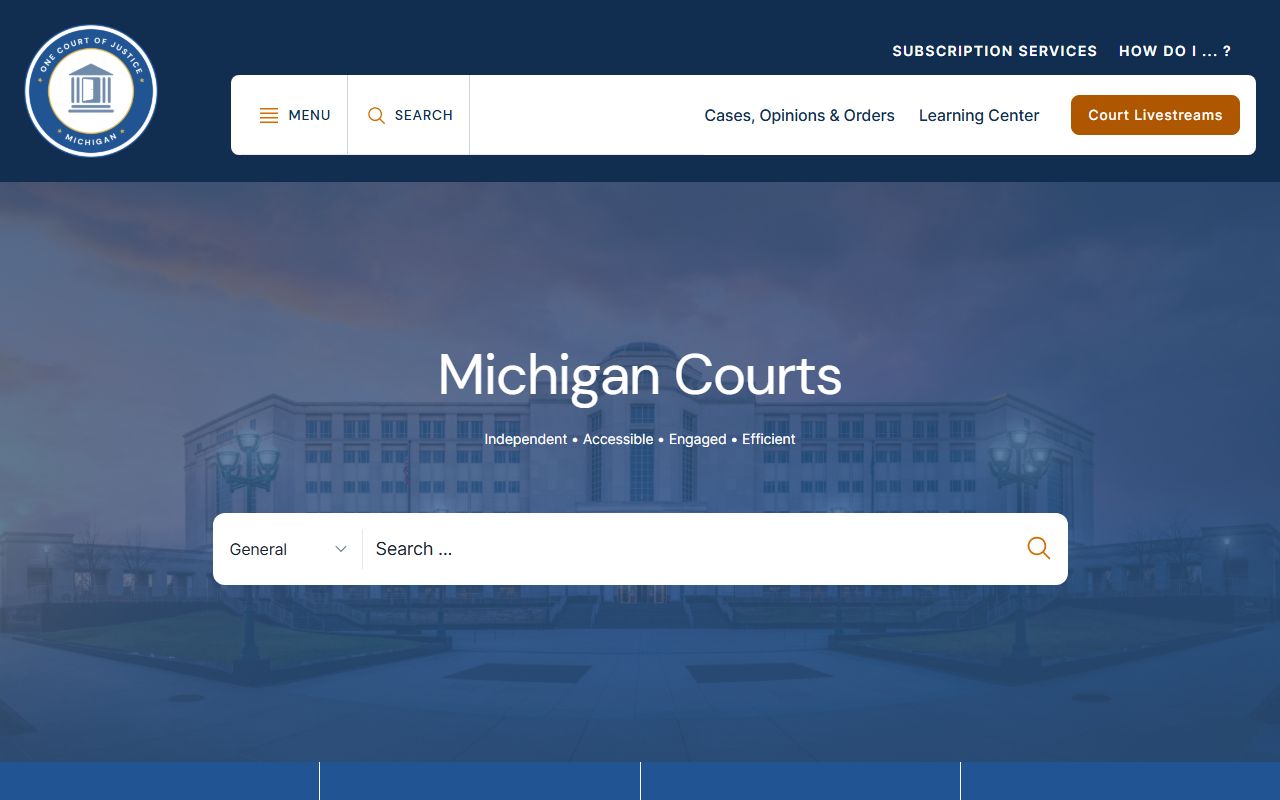
Use the Michigan Courts directory to locate the Circuit or District Court that handles criminal cases in the county you need. Each county page shows the courthouse address, hours, and any local online search tools that go beyond the statewide MiCOURT system.
Note: MiCOURT coverage varies by county; some courts participate more fully than others in the statewide case search database.
Michigan State Police ICHAT Criminal History Tool
The Internet Criminal History Access Tool, known as ICHAT, is Michigan's official public tool for name-based criminal history searches. The Michigan State Police maintain this database under MCL 28.241a, which defines criminal history records as government records including personal descriptors plus felony and misdemeanor arrests, charges, and convictions. ICHAT runs 24 hours a day. The cost is $10 per search. You pay by credit or debit card and must register for an account before running a search. Results show criminal history maintained across participating Michigan law enforcement agencies. Because this is a name-based search rather than a fingerprint check, results can include other individuals with the same name, and some records may be missing.
The Michigan State Police FOIA and records portal at michigan.gov/msp/services/foia handles formal records requests for law enforcement reports and other MSP records.
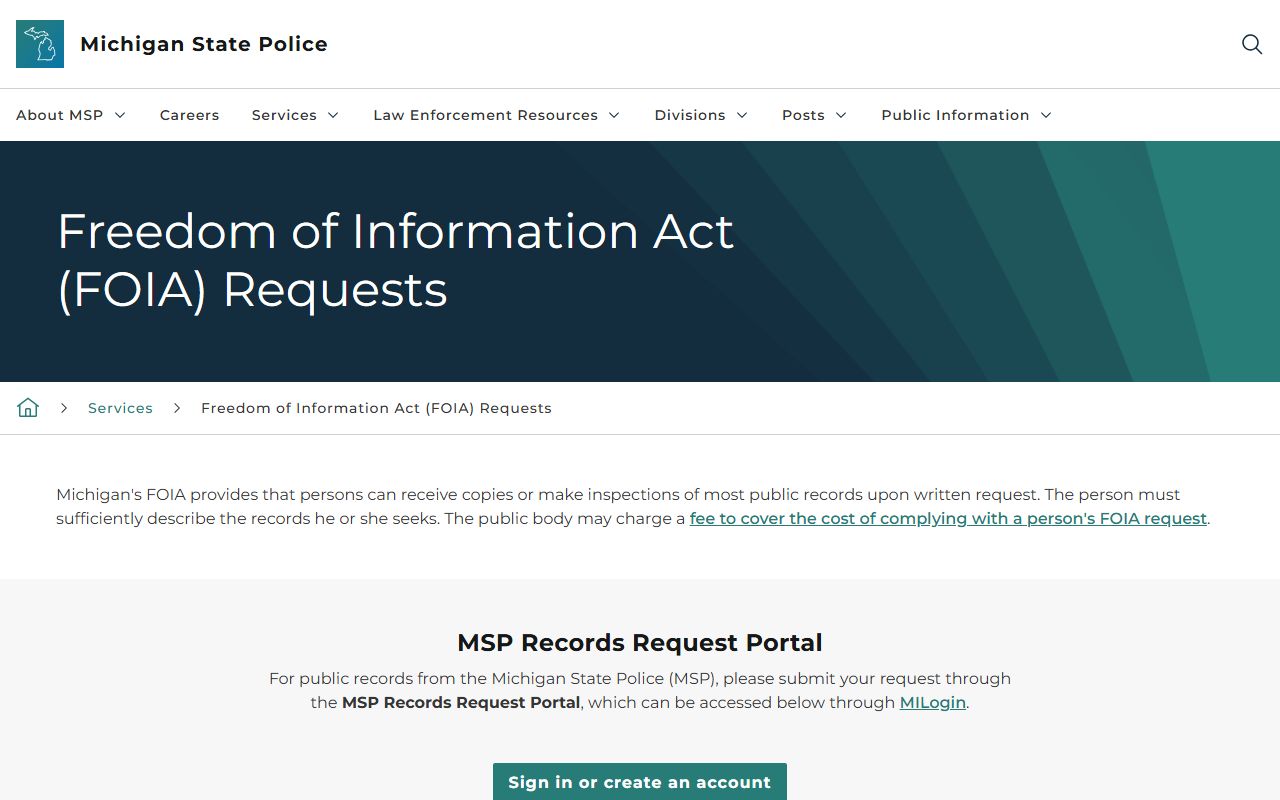
For criminal history checks, ICHAT is the faster self-service option available to the public at any time. For formal law enforcement records, use the MSP FOIA portal. The Records Resource Section at the Michigan State Police answers ICHAT questions at (517) 241-1934. You can also email MSPRecords@Michigan.gov. The MSP main records office is at 7150 Harris Drive, Dimondale, Michigan 48821.
Written fee waiver requests are accepted using Form DIR-103, the Affidavit of Indigency. Under MCL 15.234, the first $20 of fees is waived for qualifying low-income individuals. Nonprofits serving people with developmental disabilities may receive fee discounts as well. ICHAT does not include federal criminal records or cases from other states.
Michigan MiCOURT Case Search and MiFILE
MiCOURT is Michigan's free statewide court case search system. You search by party name, case number, business name, or attorney. Results include party names, charges or case type, case status, hearing dates, and docket entries. The system covers Circuit, District, and Probate Courts across Michigan, though not all courts participate equally. Some counties integrate fully with MiCOURT. Others have their own local case search tools that show more detail.
The MiFILE system at mifile.courts.michigan.gov handles electronic court filings for participating Michigan courts. Attorneys and self-represented parties can file documents through MiFILE rather than delivering paper copies to the courthouse.
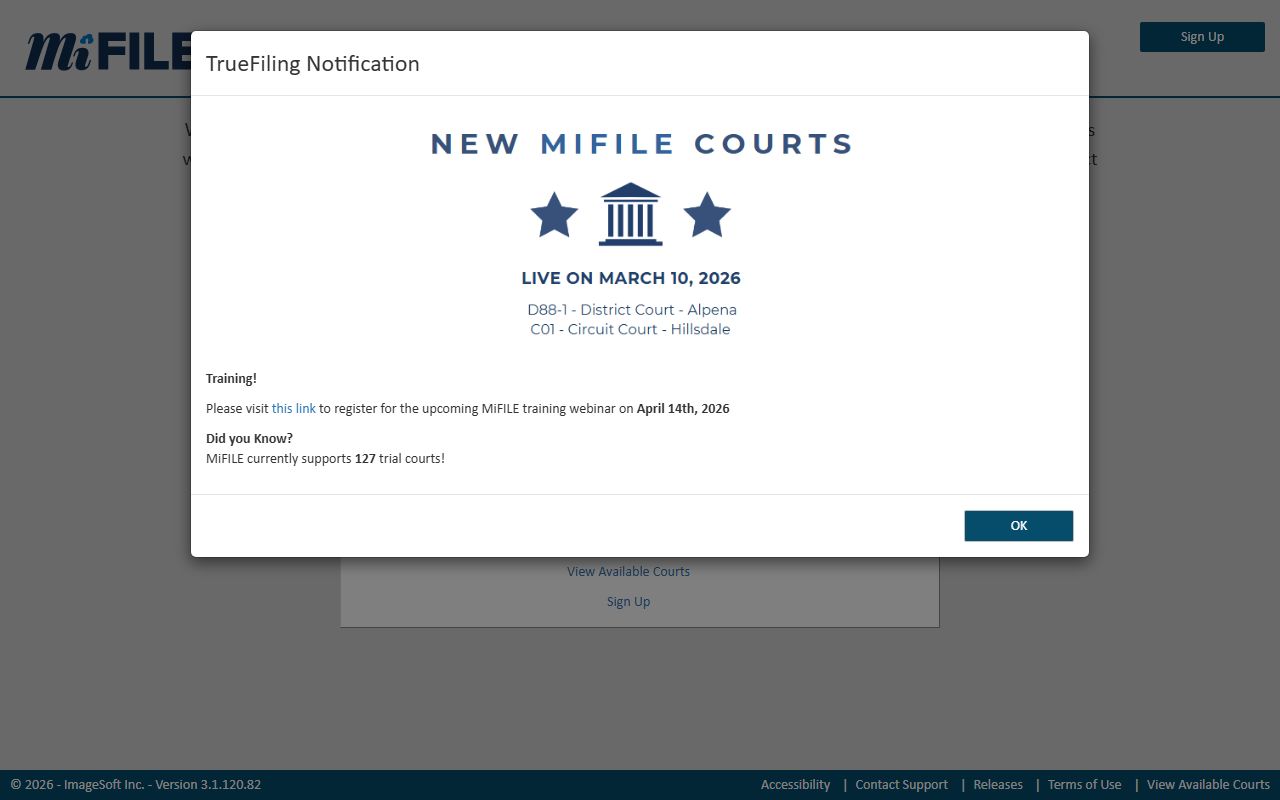
The available courts list at mifile.courts.michigan.gov/availablecourts shows which counties accept e-filed documents through MiFILE. MiCOURT shows index-level case data only. Full court documents are not available through the system. To view the complete case file, you must visit the courthouse in person or send a written request to the clerk.
Note: Some counties have their own online portals that show more detail than MiCOURT; check the county clerk's website for local search tools before visiting in person.
Michigan FOIA and Criminal Court Record Access
Michigan's Freedom of Information Act is found in MCL 15.231 through 15.246, also known as Act 442 of 1976. This law gives the public the right to request records from state agencies, county governments, school boards, and other public bodies. When you submit a FOIA request, the agency must respond within 5 business days. It can extend that deadline by up to 10 additional business days for complex requests. Standard copy fees run from $0.10 to $1.00 per page depending on the document type. Labor charges are billed at the hourly rate of the lowest-paid employee capable of handling the request. The first $20 in fees is waived for indigent requesters who file an affidavit. Fees may also be waived if releasing the records serves the public interest.
Court case records in Michigan are NOT subject to FOIA. This is a critical point many people miss. Court record access is governed separately by Michigan Court Rules MCR 8.119. Under those rules, court records are generally public but must be requested directly from the clerk of the court, not through a FOIA request. If you send a FOIA request to a county for court records, the county will deny it and direct you to contact the clerk's office. To get court records, go to the Circuit Court Clerk or District Court Clerk in the county where the case was filed. A case number speeds up the search. Clerks can also search by name, though fees may be higher without a case number. Under MCL 15.231, FOIA exemptions for criminal records include law enforcement investigative records, records that reveal investigative techniques, and records that would endanger law enforcement personnel.
The National Freedom of Information Coalition's Michigan guide at nfoic.org/michigan-foia-laws covers key rights and procedures under Michigan's public records law.
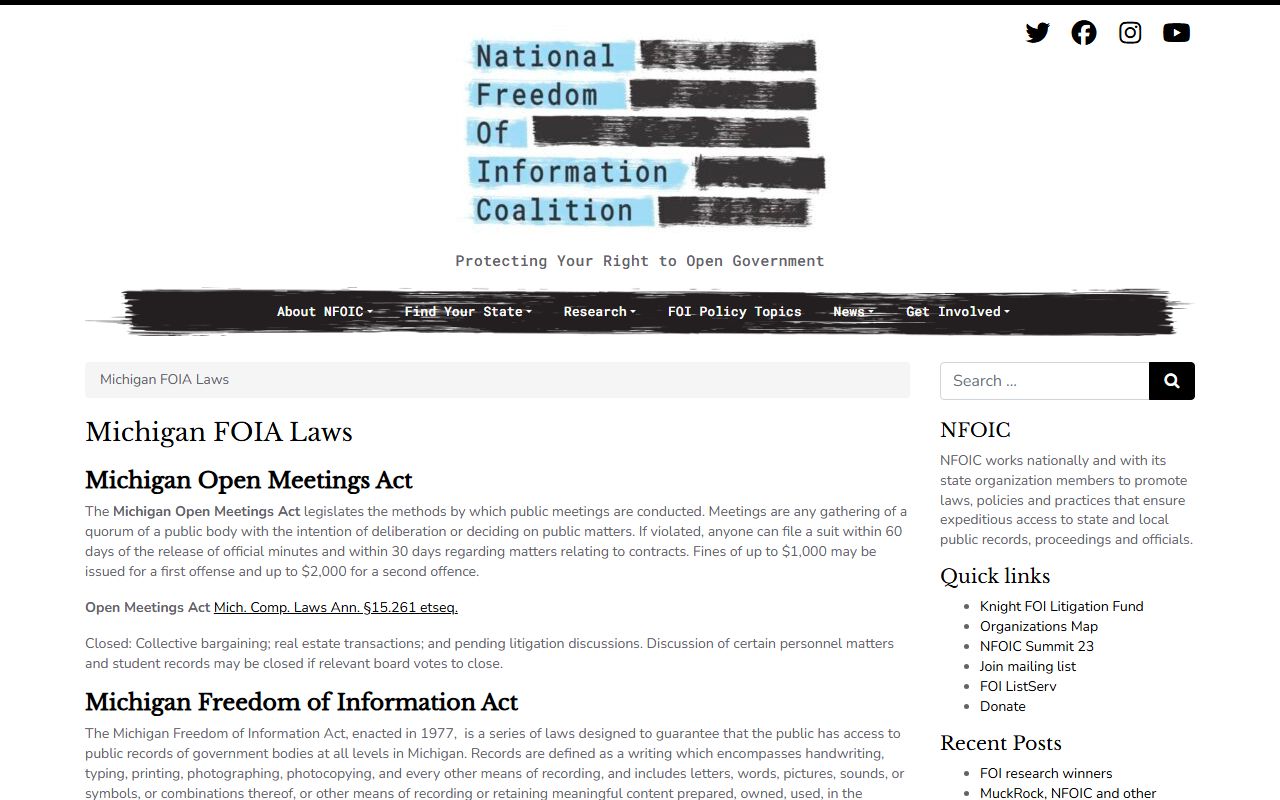
This resource is useful for understanding what you can and cannot access through FOIA versus through direct court requests. When in doubt, contact the specific office that holds the records you need and ask which process to use.
Never send a FOIA request to a Michigan court for case records. Court records are governed by MCR 8.119, not FOIA. Contact the clerk's office directly.
Michigan's Court Structure for Criminal Cases
Michigan has three levels of trial courts that handle criminal matters. Circuit Courts are the highest-level trial courts and have original jurisdiction over all felony criminal cases. Michigan has 57 judicial circuits covering all 83 counties. Some circuits serve just one county. Others share judges across two or more counties. Circuit Court clerks keep felony case files that are open to the public under MCR 8.119.
District Courts handle misdemeanor offenses, local ordinance violations, traffic matters, and civil cases under $25,000. They also conduct arraignments and set bail in felony cases before the file moves to the Circuit Court. Each county has one or more District Courts. Their records are also public. Probate Courts are the third level and handle estate matters, mental health commitments, and juvenile guardianship. Most searches for criminal court records focus on Circuit and District Courts.
The MiFILE available courts list at mifile.courts.michigan.gov/availablecourts shows all Michigan courts sorted by type and county.
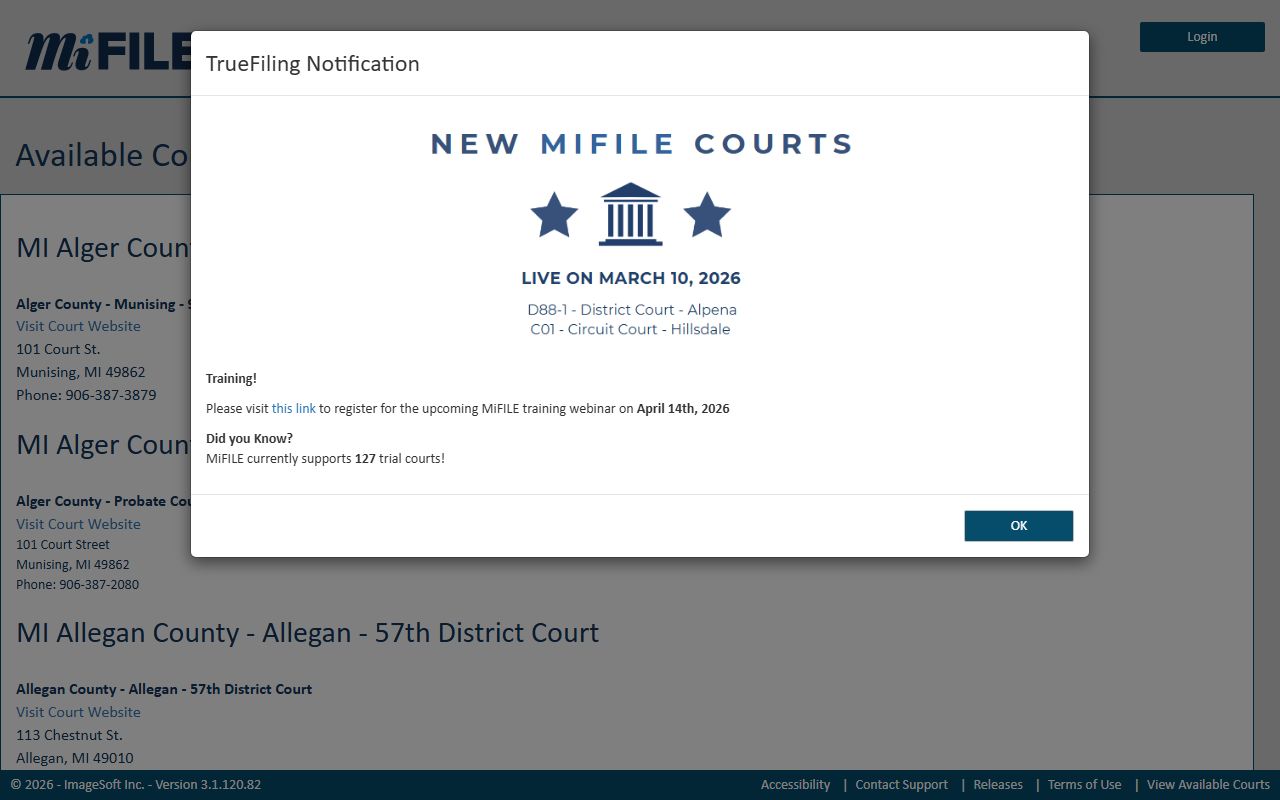
Use this list to find the court that handles your county. Each entry shows the court name, county, and filing options. Michigan also has the Court of Appeals and the Supreme Court for criminal appeals. Records from those courts are separate from the trial court files. Contact the Court of Appeals directly or search MiCOURT for appellate case data.
Michigan Criminal Record Expungement
Michigan's Clean Slate law, passed in 2021, expanded expungement eligibility for people with certain criminal convictions. Expungement removes a conviction from the public criminal record. After expungement, the offense no longer shows up in most civilian searches, including ICHAT. Eligibility depends on the crime type, the number of offenses, and how much time has passed since the conviction. Some serious crimes cannot be expunged, including murder, criminal sexual conduct, and crimes against children. Under the Clean Slate law, certain lower-level offenses can be set aside automatically after a waiting period without requiring a court petition. Others still require a formal application to the Circuit Court.
Keep this in mind when using ICHAT or MiCOURT. A clean result does not always mean no criminal history exists. Some records may be sealed, expunged, or restricted. Juvenile records are generally not open to the public. Mental health records tied to criminal cases may also have restricted access.
Legal Resources for Michigan Criminal Cases
Several resources exist for people who need help with Michigan criminal cases or record access. Michigan Legal Help at michiganlegalhelp.org offers free guides, interactive forms, and court information for self-represented individuals. The site covers criminal defense, expungement, and how to access court records, with step-by-step guides tailored to Michigan courts and procedures. The State Bar of Michigan operates a lawyer referral service at (800) 968-0738 to connect you with a licensed Michigan attorney. Michigan Legal Help also has a tool to find local legal aid organizations based on your county and income.
Michigan also maintains a public Sex Offender Registry through the Michigan State Police. This database is free to search and shows registered offenders' names, photos, offense information, and address details. It is separate from both ICHAT and MiCOURT. The Michigan Department of Corrections Offender Tracking Information System, or OTIS, lets you look up current and former inmates, parolees, and probationers under MDOC supervision. Contact MDOC at (517) 335-1426 or find records at their department page. The MSP FOIA portal uses MILogin for online submissions at michigan.gov/msp/services/foia. There is a $2.00 processing fee for online FOIA requests to MSP. You can also mail a check or money order to Michigan State Police, Cashiers Unit, P.O. Box 30266, Lansing, MI 48909.
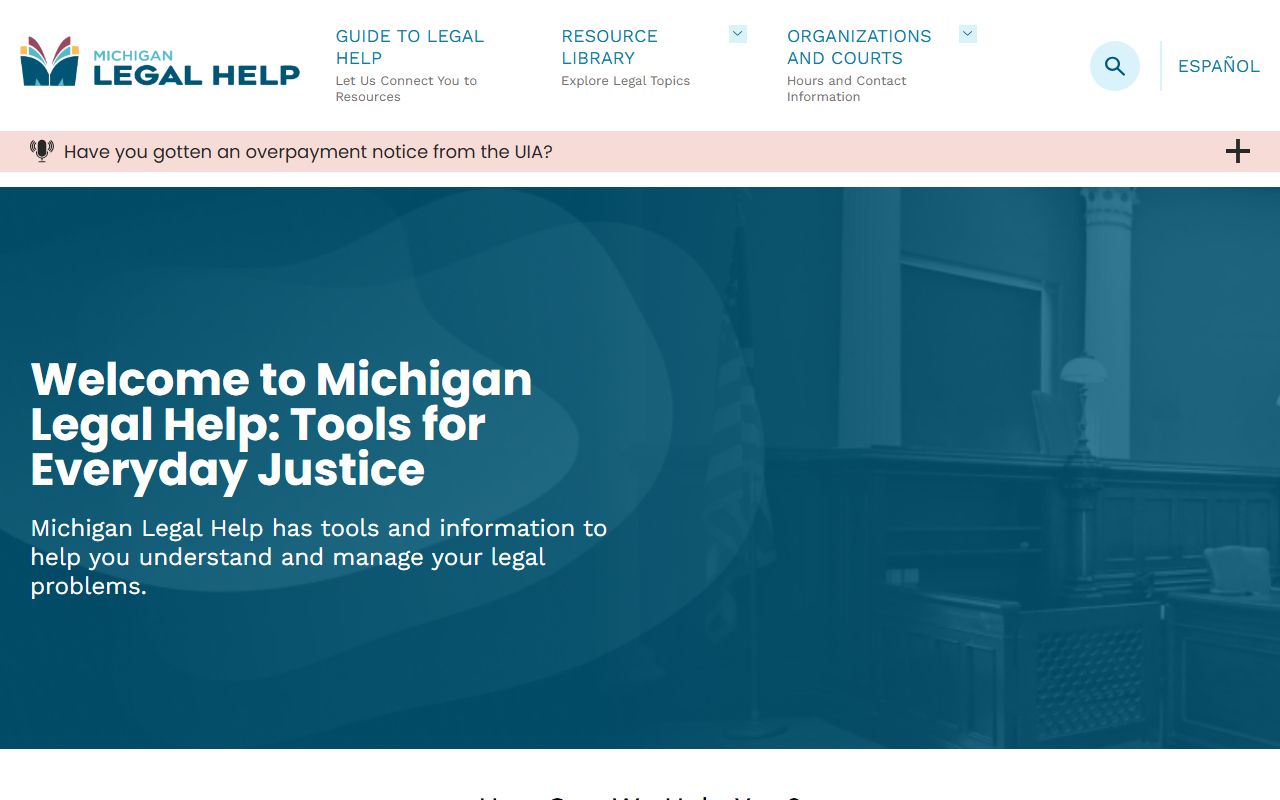
Michigan Legal Help lists court locations, filing tips, and answers to common questions about Michigan criminal court procedures, making it a practical starting point before contacting a county clerk.
Browse Michigan Criminal Court Records by County
Each of Michigan's 83 counties has Circuit and District Courts that hold criminal case files. Pick a county below to find local court contact information, record request procedures, and online search tools for Michigan criminal court records in that area.
Criminal Court Records in Major Michigan Cities
Residents of Michigan's largest cities file criminal cases at the Circuit and District Courts serving their area. Select a city below to find Michigan criminal court records resources specific to that location.